


Pat Raynor has cut hair her whole life. The state of Tennessee licensed her to do it. After her husband passed away, she moved her chair into her own garage so she could keep working part time and keep her house on one income.
No storefront. No sign. Just Pat, her scissors, and her regulars.
In 2013, Nashville shut her down.
Nobody got hurt. The city admits she never disturbed her neighbors. Someone filed an anonymous complaint, and the zoning inspectors told her to close. Her crime was serving a customer inside her own home.
So whose house is it? Hers, or the government’s?
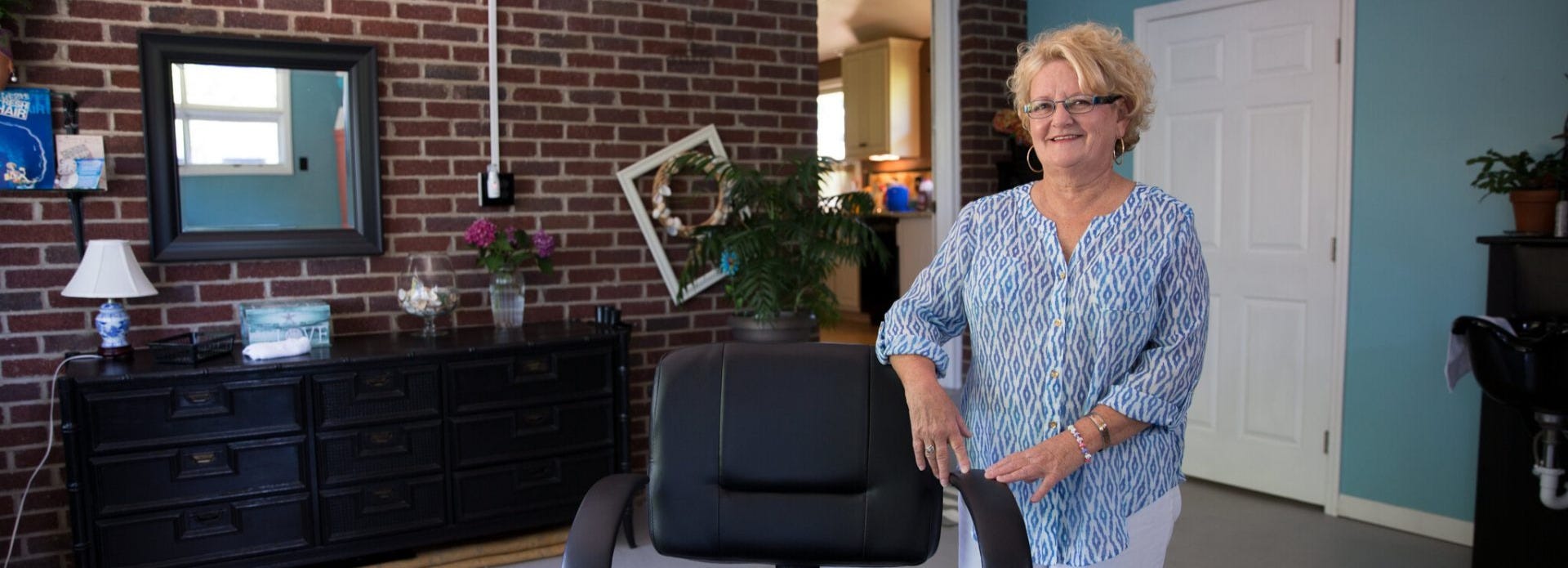
Pay Raynor: Institute for Justice
Your home used to be your business
At the founding, about 95% of Americans lived in the countryside, and most of them farmed. The farm was the home, and the home was the business.
In town, the blacksmith worked behind his house. The shopkeeper lived above the store. The doctor saw patients in his front parlor.
Your property fed your family. That was the American system, and it never went away:
Hewlett-Packard started in a Palo Alto garage.
Walt Disney started in his uncle’s garage.
Jeff Bezos started Amazon in his garage.
According to the Small Business Administration, about half of all American businesses still run out of someone’s home.
Then the planners showed up
In the early 1900s, planners decided a city should run like a machine. Houses go here. Shops go there. Factories go way over there.
In 1926, the Supreme Court blessed the idea in a case out of Euclid, Ohio. Towns across the country drew their lines, and the oldest business model in America got boxed out because it didn’t look neat enough on the map.
Plenty of cities still allow a “home occupation.” Read the fine print:
No customers at the house
No employees
No sign
Permit fees, and sometimes a public hearing where your neighbors vote on how you earn a living
Nashville rigged the rules
Pat tried to fix it the right way. She asked the city to rezone her house, and 44 of her neighbors signed petitions backing her. The city said no.
So in 2017 she sued.
In 2020, with the lawsuit hanging over its head, Nashville changed the rule. Pat could serve 6 customers a day, as long as she logged every one and handed the records to code enforcement on demand.
Other home businesses in the same city got 12 customers a day with no paperwork at all.
An appeals court ruled unanimously that the city had no rational reason to treat her differently. In March 2026, a court made it final.
9 years in court to win the right to be treated like her neighbors.
And the courts are asking the wrong question. Whether city hall acted “rationally” is the wrong test. The right test: does this law violate an American’s God-given right to own and use her property?
It’s still happening
New Hampshire. This year, a bill would have let you run a small business from home without begging city hall: it allowed up to 4 employees, 20 customer visits a day, and a small sign out front. The House killed it. It’s sad to see the Live Free or Die state decide to keep its people asking permission.
Texas. In 2025, the state told cities to leave no-impact home businesses alone. Venus, a small town outside Dallas, decided that didn’t apply to them. Careful readers might note the same pattern in Dallas and its municipalities that I see.
The state inspected and approved Rosi Paredes to care for up to 6 children in her home. Her homeowners association backed her. Venus bans home daycares outright, so the city put a notice on her door and threatened fines of up to $2,000 a day.
The same people who complain about the cost of childcare hand city hall the power to make childcare scarce.
In October, Rosi sued.
5 states already fixed this
Florida, 2021
Missouri, 2022
Iowa, 2022
Texas, 2025
North Carolina, 2026
The laws are simple. If your business stays inside your home, doesn’t clog the street, and can’t be seen from the sidewalk, the city can’t shut you down or require a special permit.
Picture what that unlocks in your town. The retired machinist sharpens knives in his garage. The mom watches a few kids and earns extra money. The man fresh out of trade school fixes small engines in his driveway and makes rent.
The money stays on the block. Nobody signs a commercial lease just to find out if an idea works.
What you can do
Look up “home occupation” in your city code.
Find out what you’re allowed to do on your own property.
If the answer is “ask permission,” tell your city council and your state lawmakers that 5 states have fixed this, and yours should be next.
Your home is your property. What you do inside it, as long as you’re not hurting anyone, is your business.
Literally.
The American Dream isn’t dead. It’s being blocked.


